Gait speed, measured precisely and without a stopwatch
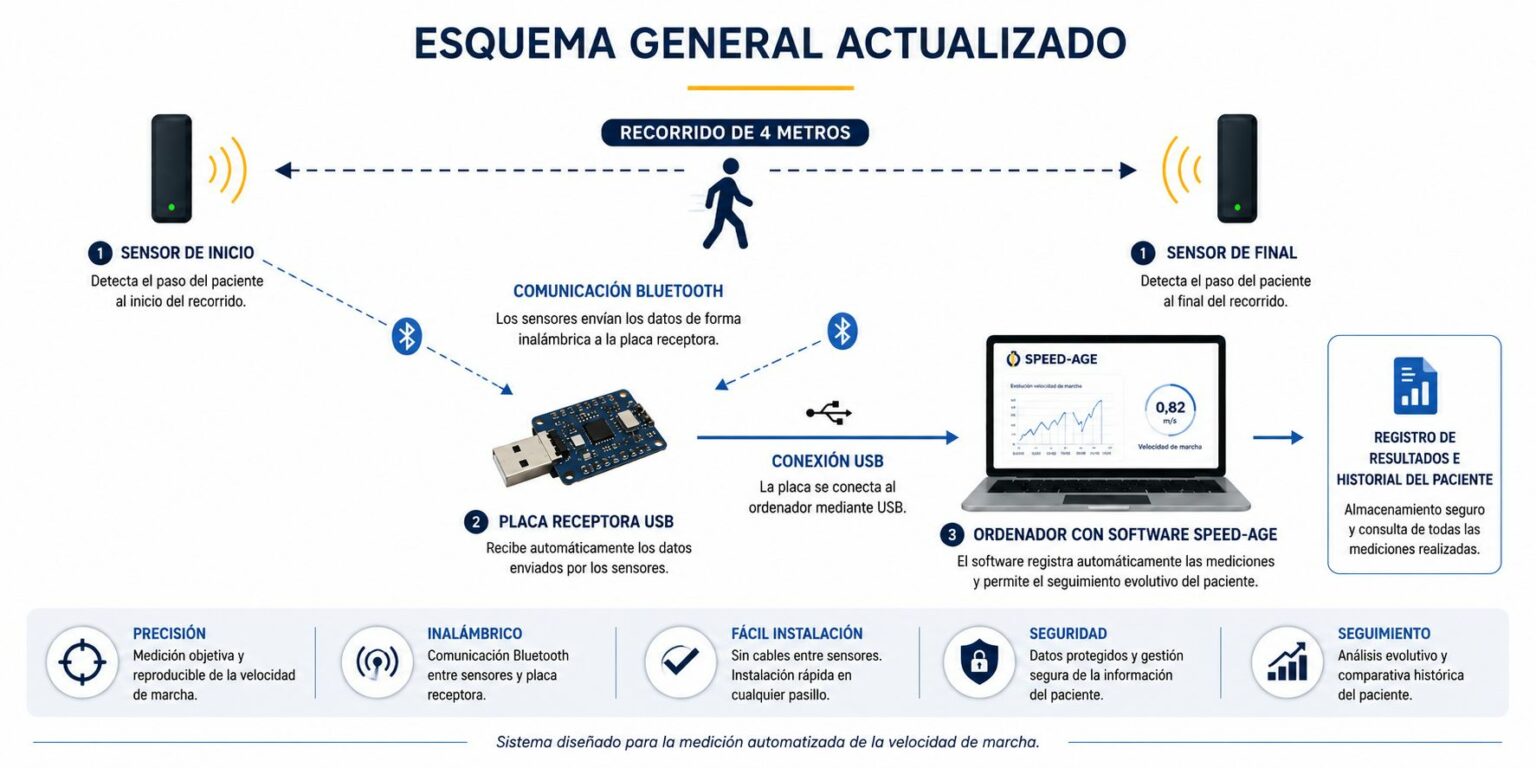
SpeedAge is an automated 4-metre gait walkway that measures gait speed with two wireless sensors connected via Bluetooth, records every result and tracks how it changes over time. Evidence links gait speed to biological ageing from the age of 45. Validated in real clinical practice and CE marked.
It fits in any corridor
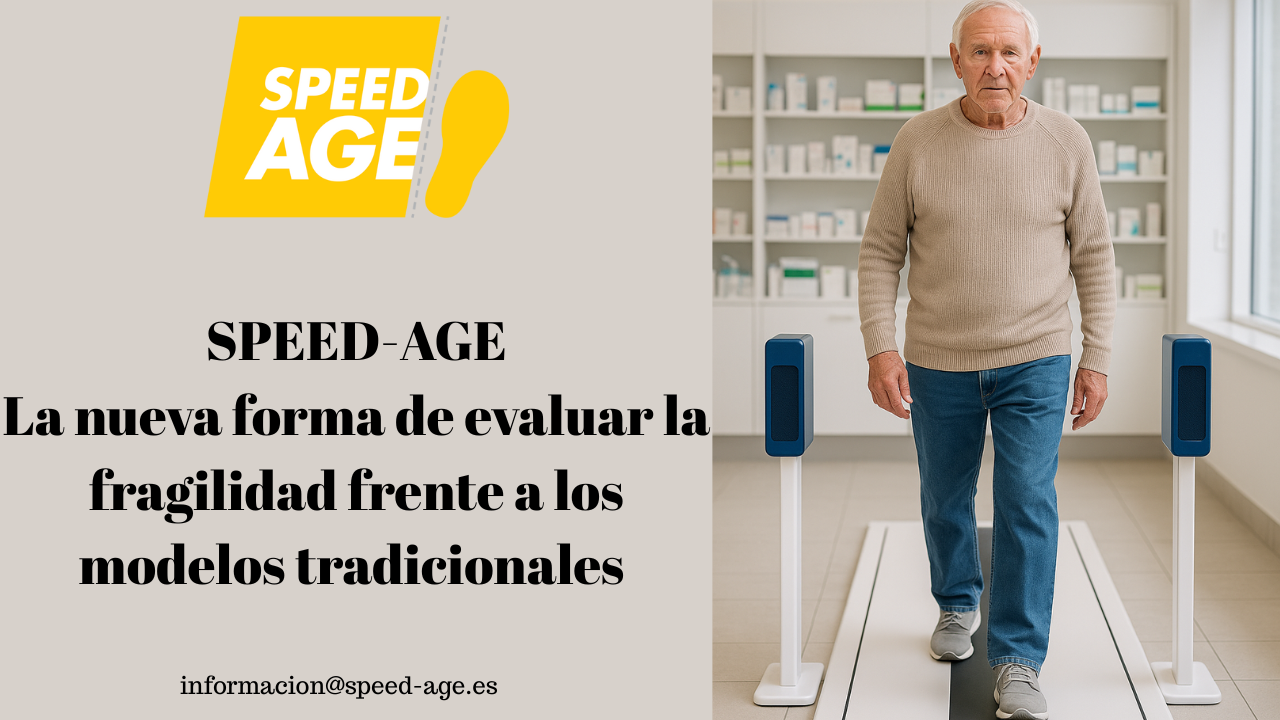
Two wireless sensors mark the start and the end of 4 metres. No cables on the floor and no building work: on a hospital ward, in a clinic, in a care home or in a pharmacy.
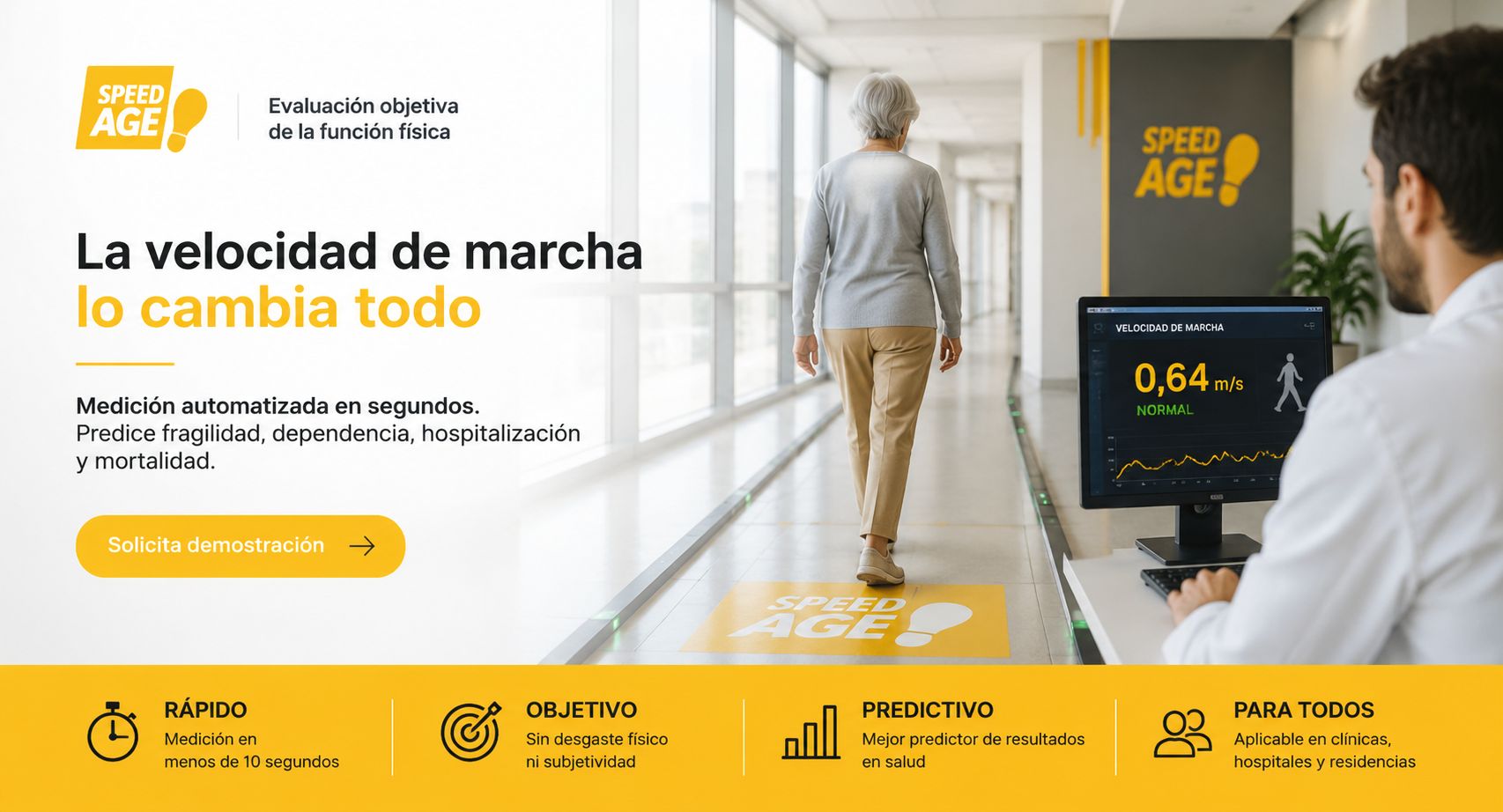
Illustrative images.
Progress charts: every loss shows up, however small
The SpeedAge software stores every measurement and plots it on a clear chart for each person. Every change is visible, even 0.02 m/s, so a downward trend can be spotted before it turns into frailty or a fall.
Sample patient with illustrative data. A single change may be due to the day itself; what guides the clinical decision is the trend over several measurements (a change of 0.05 m/s is already considered relevant).
Not just for older people: gait speed tells a story from age 45
Large studies show that the way we walk already reflects biological ageing in midlife, decades before frailty appears. Measuring it early means acting sooner.
Accelerated ageing and brain health
Among 904 members of the Dunedin cohort measured at age 45, those who walked more slowly showed accelerated biological ageing and poorer brain and cognitive function.
Rasmussen et al., JAMA Network Open 2019Longer life expectancy
In the UK Biobank, people who reported a brisk walking pace had a longer life expectancy, estimated at age 45, regardless of their weight.
Zaccardi et al., Mayo Clinic Proceedings 2019Longer telomeres
A steady or brisk walking pace was associated with longer telomeres, a marker of biological age, in middle-aged adults. Genetic analysis points to a causal relationship.
Dempsey et al., Communications Biology 2022In the UK Biobank studies, walking pace was self-reported by participants. SpeedAge measures it objectively and tracks how it changes.
All about SpeedAge
From biomarker to evidence: what it measures, how it works, who validated it and where it is used.
What a 4-metre measurement predicts
Three findings from the literature that explain why measuring gait speed properly changes decisions. More about gait speed
lower risk of death for every additional 0.1 m/s
In 34,485 older adults from 9 cohorts, every additional 0.1 m/s of gait speed was associated with a lower risk of death (HR 0.88).
Studenski et al., JAMA 2011frailty criterion in the 2026 Spanish National Health System consensus
The update approved in April 2026 uses 4-metre gait speed, together with the SPPB, TUG and FRAIL, to detect frailty, which affects around 18% of older people.
Spanish Ministry of Health, 2026risk of dementia when memory and gait both decline
People whose memory and gait speed decline at the same time have a 6.28 times higher risk of dementia. Measuring gait speed repeatedly tells you more than a single measurement.
Tian et al., JAMA Network Open 2020Installed in Spain and Portugal
Hospitals, pharmacies, geriatric clinics and scientific studies with universities. See all centres
The DENDRITE project
SpeedAge takes part in DENDRITE, the personalised medicine project funded by the ISCIII to detect early the risk of mild cognitive impairment in adults aged 55 to 70, before clinical signs appear. It brings together around a hundred clinical and basic researchers.
- Albacete General HospitalGeriatrics Department · Spain
- Hospital dos MarmeleirosFunchal, Madeira · Portugal
- Santa Casa da Misericórdia de OvarOvar · Portugal
- Private geriatric clinicMurcia · Spain
Real-world results
In the Agilidade project at Santa Casa da Misericórdia de Ovar, the group that exercised guided by SpeedAge measurements gained an average of 0.26 m/s in 12 weeks; the control group, 0.04 m/s. See the full case
From the blog
Articles on frailty, physical function and active longevity, in Spanish. See all posts
Try SpeedAge in your centre
Use it with your patients before deciding, or choose renting or purchase. If you do not keep the device after the trial, we refund the fee.
Or write to us at informacion@speed-age.es